When most people think of physical therapy, they usually picture someone recovering from back pain, a sprained muscle, or surgery. While these are all common reasons to see a physical therapist, there’s another important area of care that’s often overlooked: vestibular disorders.
What Are Vestibular Disorders?
Vestibular disorders affect the body’s balance and equilibrium system—the system that helps us move safely through the world on two feet. Under normal circumstances, we take balance for granted. That’s because our brains constantly integrate information from:
- Our vision
- Our sense of body awareness (proprioception)
- Our inner ear organs (the vestibular system)
These systems work together behind the scenes to keep us steady, upright, and oriented in space. But when something goes wrong in this delicate system, it can cause serious problems.

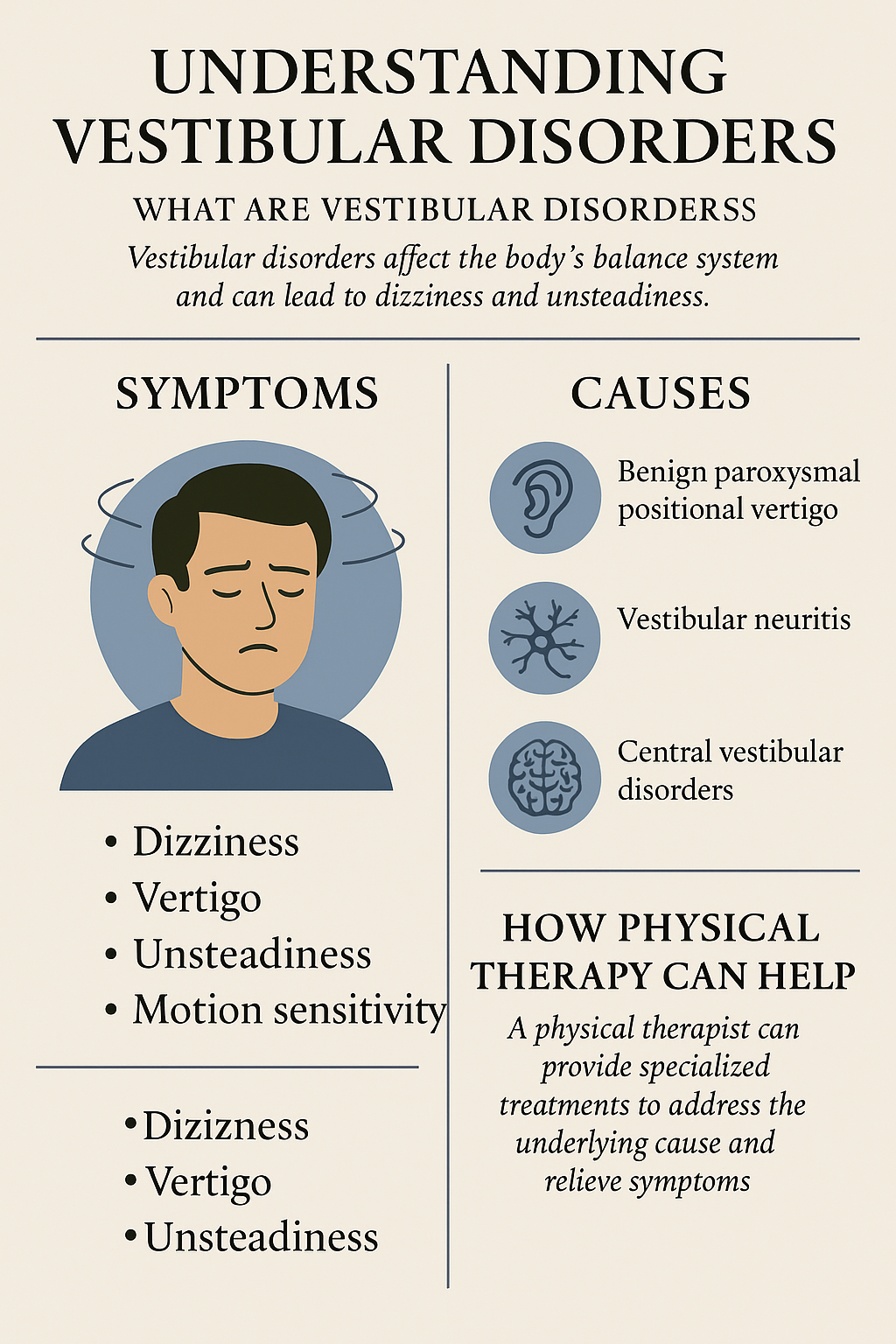
Symptoms of Vestibular Dysfunction
People with vestibular disorders often experience:
- Dizziness
- Spinning sensations (vertigo)
- Unsteadiness or imbalance
- Difficulty focusing during movement
- Motion sensitivity
These symptoms can range from mild to debilitating—and when present, they make daily life significantly more difficult.
What Causes Vestibular Disorders?
Vestibular disorders can result from various causes, and their complexity can vary widely. Some common examples include:
- Benign Paroxysmal Positional Vertigo (BPPV): A mechanical issue in the small, fluid-filled canals of the inner ear. One of the most common vestibular disorders, often triggered by changes in head position.
- Vestibular Neuritis or Labyrinthitis: Inflammation of the vestibular nerve, which transmits balance signals from the inner ear to the brain.
- Central Vestibular Disorders: Involving the parts of the brain that interpret balance signals. These tend to be more complex and may require a neurologic work-up.
- Non-Vestibular Causes: Dizziness can also stem from issues unrelated to the vestibular system, such as low blood pressure, medication side effects, or cardiovascular issues. A skilled clinician must be able to recognize these red flags and refer appropriately.
How Physical Therapy Can Help
With specialized training and equipment, physical therapists can successfully assess and treat many vestibular disorders. However, vestibular rehab is a highly specialized field that requires:
- Advanced clinical training
- Careful diagnostic techniques
- Sophisticated tools
One of the key tools in vestibular assessment is the use of Frenzel goggles. These goggles allow the therapist to observe the patient’s involuntary eye movements (nystagmus) during specific head and body positions, while also blocking out visual distractions that could suppress these reflexes. This allows for accurate assessment rather than guesswork.
A good vestibular physical therapy clinic should have both the clinical skills and the equipment to evaluate and treat the root cause of symptoms. If you’re considering care, don’t hesitate to ask a prospective provider if they’re equipped with tools like Frenzel goggles—it’s a great indicator that they take vestibular care seriously.
The Bottom Line
Vestibular disorders can be distressing, but they are treatable—especially when the right clinician is involved. A skilled physical therapist trained in vestibular rehab can guide you through the recovery process with targeted exercises and interventions based on an accurate diagnosis.
If you’re experiencing dizziness, vertigo, or unexplained imbalance, don’t wait. Reach out to a qualified vestibular PT and get the help you need to feel steady again.
Have questions or wondering if vestibular therapy might help you?
— we’re happy to talk and help you find clarity.